The map exists.
Here it is.
Every organization moves through the same lifecycle. Not the same timeline. Not the same industry pressures. The same structural arc. Most organizations do not know they are inside it. They experience the consequences of each phase without the framework to read them, so they misname structural failure as a people problem, a motivation problem, or a communication problem.
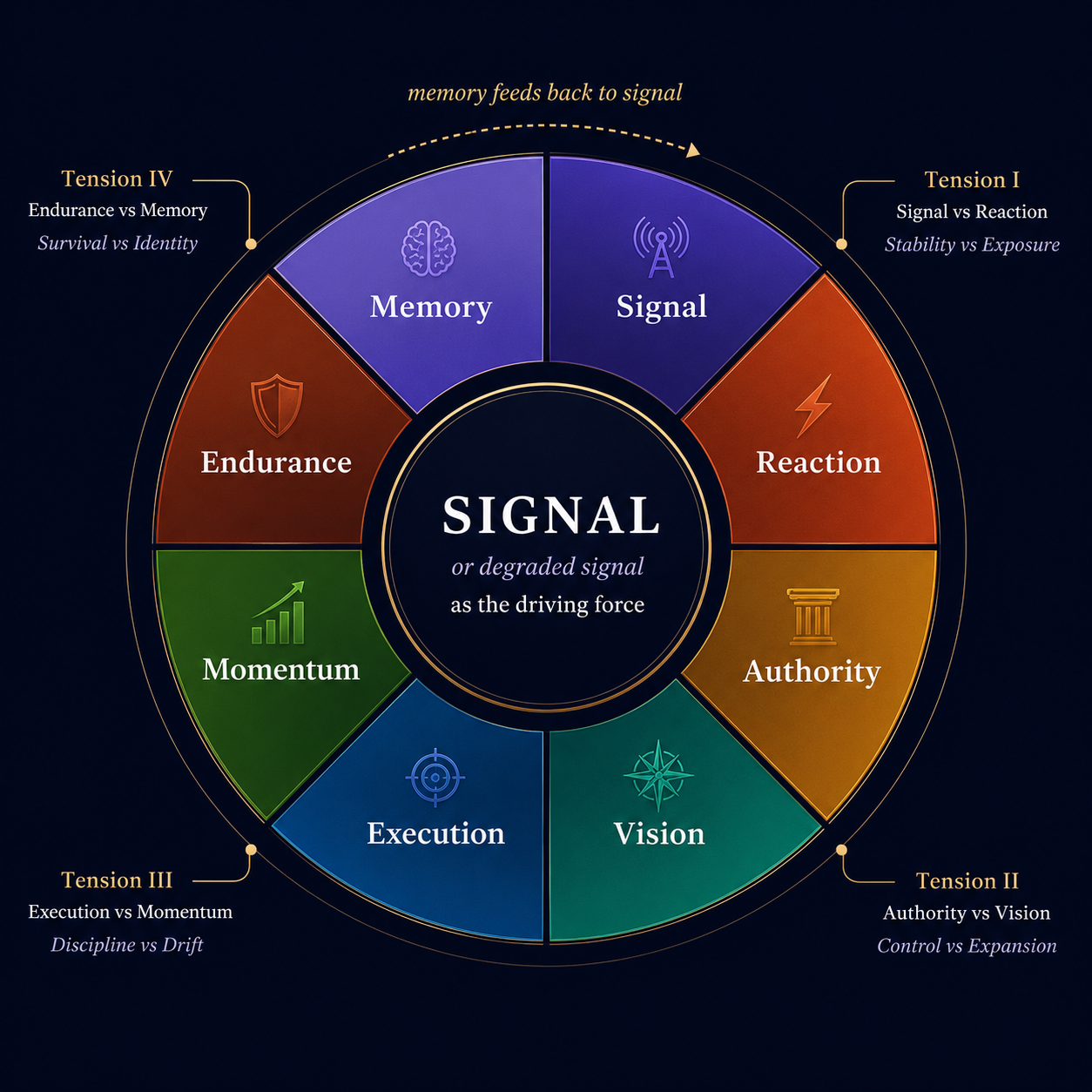
Eight phases. Four tension points. One diagnostic system.
The organizational lifecycle
The Leadership by Design framework maps eight phases every organization must navigate: Signal, Reaction, Authority, Vision, Execution, Momentum, Endurance, and Memory. These are not decorative categories. They are recurring structural realities, and sequence matters because sequence is the argument.
Eight governing laws. One organizational lifecycle.
The Birds and Bees of Leadership.
Signal is not intention. It is consequence.
Of Rabbits and Rhinos.
Identity wiring governs behavioral response to change.
The Weight of the Throne.
Authority must be continuously legitimized and stabilized.
What the Ground Cannot See.
Strategic altitude determines clarity and timing.
The Architecture of Ordinary.
Disciplined distributed effort compounds into lift.
When the Stampede Becomes the Strategy.
Momentum and conformity shape collective survival under uncertainty.
The Architecture of the Long Season.
Coordinated rotation sustains survival in hostile environments.
What the Matriarch Remembers.
Institutional memory preserves identity across time.
The failure isn’t in the phase. It’s in the tension between them.
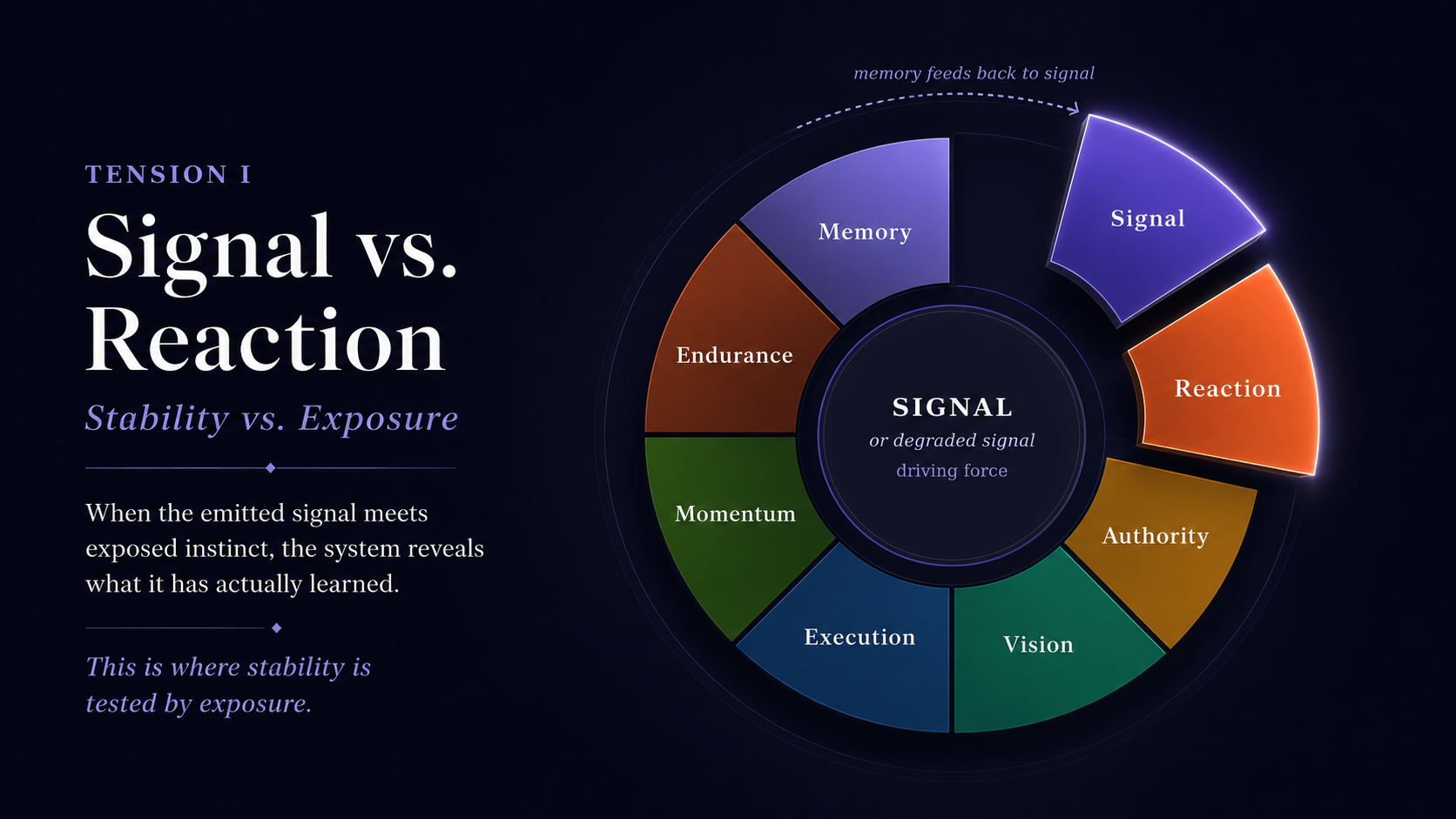
Tension I — Signal vs. Reaction
Stability vs. Exposure. The system learns the real rule from the leader’s observable response under pressure.
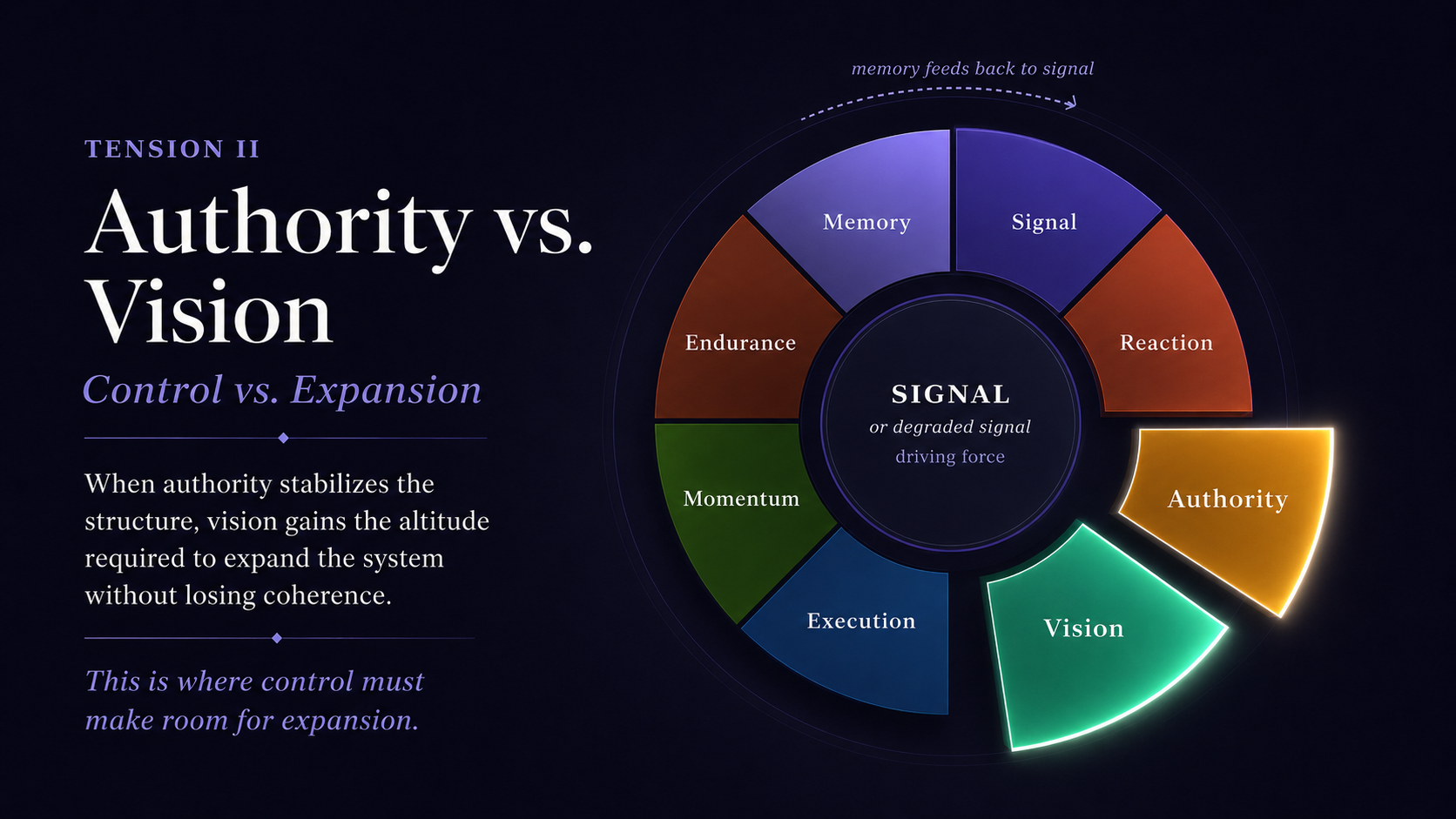
Tension II — Authority vs. Vision
Control vs. Expansion. Authority that built order can become the ceiling on expansion.
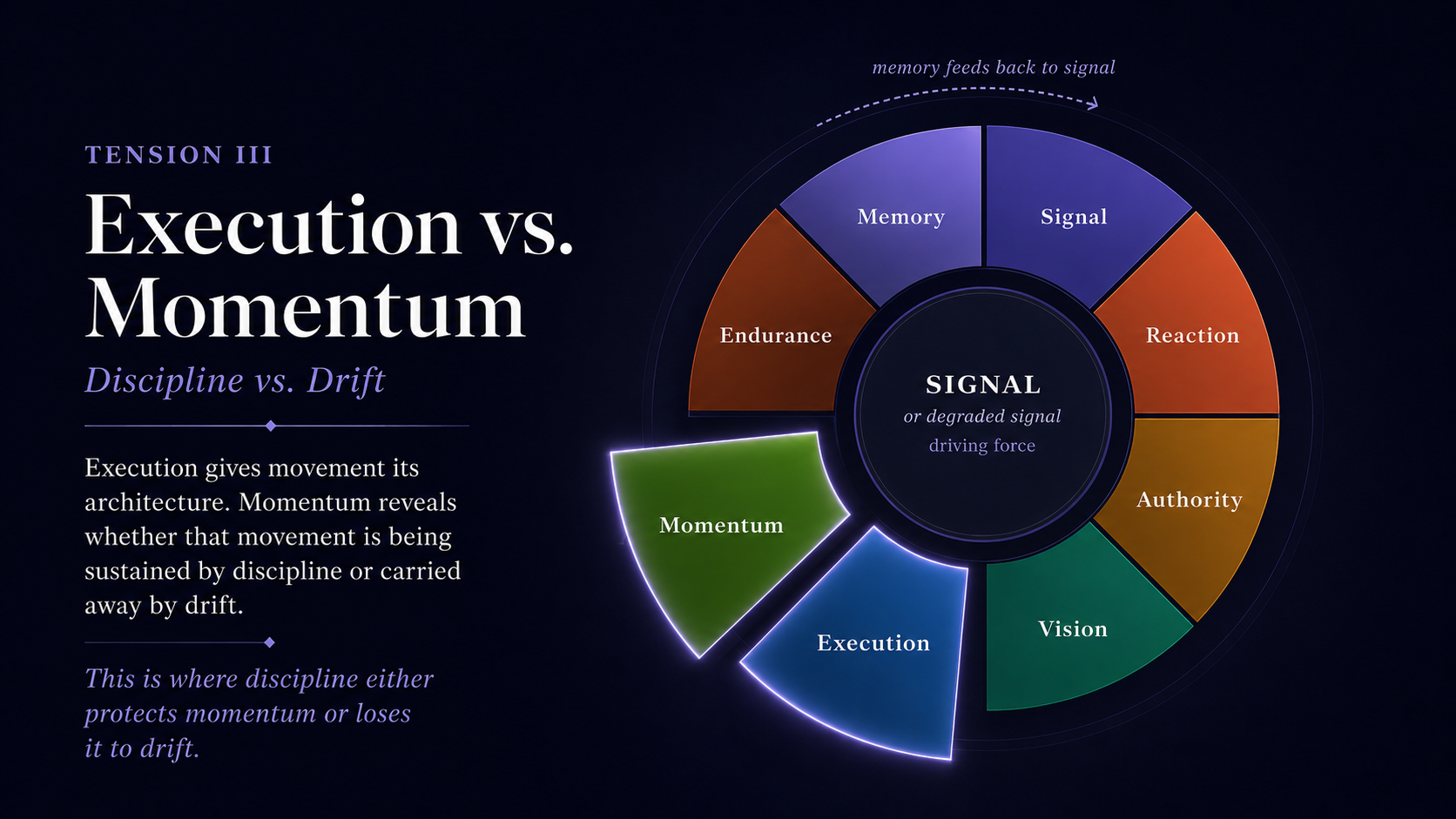
Tension III — Execution vs. Momentum
Discipline vs. Drift. Momentum without discipline borrows from the future.
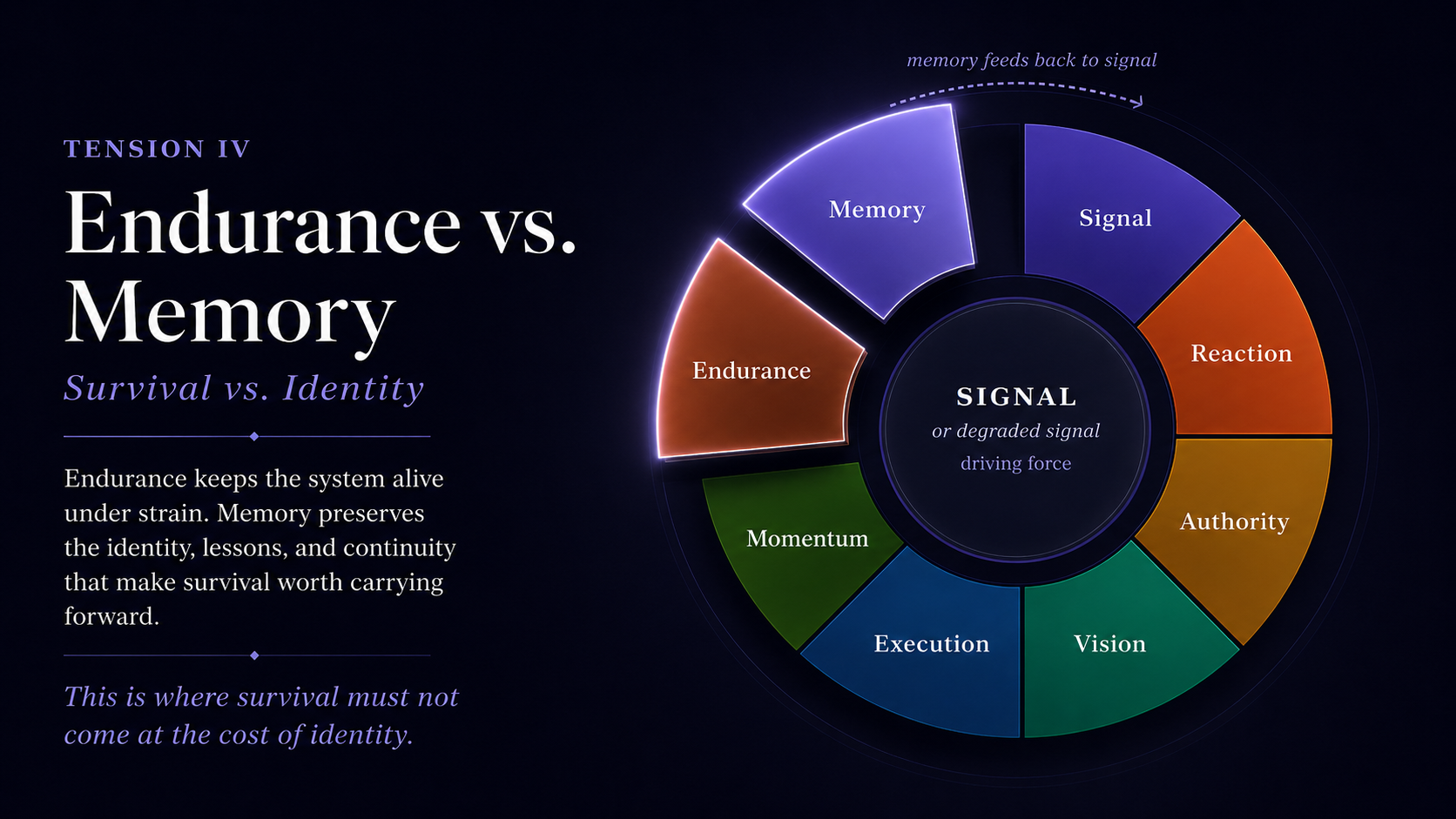
Tension IV — Endurance vs. Memory
Survival vs. Identity. Organizations can survive current pressure in ways that quietly erode memory.
The map is not the work. It is what makes the work possible.
The books provide the intellectual infrastructure. The seminars install diagnostic capability. Consulting deploys the framework inside a specific organization. Keynotes make the framework visible in a room. Every branch runs on the same system. The depth of engagement is what differs.
You do not fix the visible phase. You trace the fracture back to its source.